Competition – Week 12 of the 52 week short story challenge

download (1)

Bitchiness alert! 

But consider this a therapeutic blog – please?

After all – it’s all fiction isn’t it?

I can vaguely remember the day you came for an interview. Our boss Barry showed you round the office as if you were his most prized possession. Unbeknown to us he had met you at a different office and persuaded you to apply for the job.

And to be fair, everyone in the office agreed that you were very young and attractive; with more than a passing resemblance to Cameron Diaz in her Charlie’s Angels incarnation. At the time we thought we were paying you a compliment but we later found that it was a comment guaranteed to wind you up.

Not surprisingly, Barry gave you the job – but you didn’t have much in the way of competition.

Introducing a young, blonde female into an office of largely middle-aged (and in some cases aggressively menopausal) women might well have been Barry’s way of brightening up his surroundings. Whilst we all welcomed you; there were some – and I include myself in this – who wondered if there was a brain inside that regularly coiffed head.

It didn’t take long to find out.

Nope.

Well, there was natural cunning in evidence…

There was also the ability to charm every red-blooded male within a five mile radius – even those senior managers who oozed sleaze as they patted you on the shoulder and leaned just a little too close when looking at your computer screen.

Trying to teach you how to actually do the job wasn’t easy.

It took patience and the ability to overlook the fact that you were very good at evading work.

You had come from a receptionist’s post where the most mentally taxing issue was working out the whereabouts of people in the building and whether they were ‘available’ or not.

I have to admit that your phone voice was okay – except for  the constantly niggling ‘we was waiting for you to call us‘ or ‘you should of called us earlier‘.

Other less critical staff members put it down to your youth and the fact that you came from a ‘rough’ part of the town.

But me…

I gritted my teeth and tried to close my ears. Luckily you spent most of your time working – and I use that word loosely – in the smaller office.

Your dog got run over a couple of weeks before Christmas and Barry, being the big softy that he was, told you not to come into work until you felt better.

Whilst we were all very sympathetic about the dog, but this was the animal that you came into work complaining about how smelly it was and how it barked at you all the time.  We didn’t expect your mourning to last well into the New Year however. No mention of the poor dog on your return but you regaled us with how merrily you had spent the festive season. Your roots had been done, your nails were newly lacquered and you were wearing a beautiful white wool coat that fitted you like a glove and must have cost all your Christmas money.

The only sign of grief was when you went in to see Barry to explain why you had been off work for so long. It took but a few tears and dainty sniffles – he didn’t ask for a doctor’s certificate or ask you to take the time off as annual leave but patted your hand and told the rest of us to be kind to you – you were refreshing your mascara in the toilet at the time.

Some of us who had covered for you over Christmas and New Year were not feeling too sympathetic as you boasted about your ability to twist Barry round your little finger.

Not an ability that I ever acquired.

Despite having known Barry for several years before he became our manager, he still made me take annual leave when later in the year my husband was rushed into hospital with kidney stones and I had two small children to take to school and collect. He didn’t think my circumstances met his criteria for compassionate leave.

I was still rankling from this when you and your long-suffering boyfriend decided to buy a house together.

For months the offices were inundated with pictures of potential houses. I’m all for youth and exuberance but you really overdid it. You spent more time toting your estate agent specs around the offices than you actually did at your desk. Even total strangers coming into reception asking for advice were cajoled into giving it instead.

A sigh of relief went round the office when you finally completed the sale.

A collective groan went round the office when you decided that you needed our advice on everything you bought for the house – from toilet brushes to cutlery to the colour of the paint for the garden shed. There was far more but those of us who showed less enthusiasm were ignored after a while.

Hooray.

Then we moved from our offices to a different building where we were given one big room with a glass partitioned office at the end for Barry.

Needless to say, you picked a desk where you could simper at Barry whenever he caught your eye, but positioned so that he couldn’t see the amount of time you were busy on FaceAche chatting with your friends while your office mates were busy with the extra work you were making.

Some of your colleagues covered for you.

Some of us didn’t.

We were asked to carry out an audit on the work we were doing in order to justify our jobs. We were aided in this by the IT department who ran stats on each of the computers as well as the telephone logs.

After the first week, guess who had accomplished the least?

Half an hour of batting the baby blues, sobbing in a contrived fashion and using every tactic within your limited repertoire, you managed to persuade Barry that you felt intimidated by ‘some’ of the other people in the office – especially those who criticised your grammar and spelling.

Barry arranged for you to attend Access to English classes after work at the local Adult Education Centre. He then took the opportunity to lecture the rest of the office about jealousy and bullying.

We had eight weeks of you telling us about Shakespeare and how we should be reading Romeo and Juliet – like what you were. It was inconceivable to you that any of your colleagues had ever even heard of Shakespeare. Access to English had turned you into a self-confessed culture vulture in only eight weeks. Your own access to English was still limited but at least the spelling improved on your FaceAche posts and the very dodgy emails you circulated.

Those of us with more sense and an awareness of the computer use rules,  deleted the emails without opening them – I really didn’t need to look at pictures of male genitalia  thank you.

The IT crowd picked up one of your dodgiest emails when they were running a security check. You tried to plead ignorance and said that ‘a friend‘ had sent it out on your behalf and you hadn’t even looked at it.

We all got another lecture from Barry on circulating dodgy emails and were warned that a very close eye was being kept on us now.

Then you and your fiancé decided to get married.

It was terrible.


If I thought the house buying and fitting out was bad – this was a million times worse.

I could see your screen from where I sat and it was a constant shade of violent pink as you surfed the net for your fairy-tale wedding while the rest of us tried to zone out your wedding wittering.

I didn’t care whether your wedding favours were going to be blush pink, purple or puce. I had a feeling that I wouldn’t be finding out first-hand anyway.


Even the most doting of colleagues was beginning to get a bit cheesed off with your wedding obsession.

Sales of Black Cohosh from the health food shop increased dramatically and even Barry was seen sneaking a pill or two out of the communal container in moments of deep stress.

(Black Cohosh is very good for menopausal symptoms – allegedly).

The budget for the event of the year climbed and climbed and climbed.

We wondered where all the money was coming from – none of us were paid that much and neither was your fiancé.

When the number of adult bridesmaids requiring designer dresses climbed into double figures, something snapped.

Your husband-to-be called off the wedding on the grounds that it was far too expensive, it wasn’t what he wanted, he was sick of going to wedding fairs and missing his Sunday football, and you just wouldn’t shut up about the (*******) wedding!

You had to have the best – or what you deemed to be better than anyone else’s.

The young man moved back to his mum’s but we were spared the initial fallout because Barry very kindly told you to take time off to recover.

Due to the fact that a couple of your colleagues FaceAche  friends and could see your page, we were all a little surprised that in your grief at being jilted, you had found time to spend some of the wedding money on laser surgery for your eyes as well as several girly nights out and a trip down to that London.

It was noted that your eyes were suitably red and sore when you finally returned and Barry put it down to grief.

We knew different.

Fate took me away from that office shortly afterwards, and into a new office arena where I was better managed, less irritated and far more mellow – for a while.

I heard on the office grapevine that the two of you got back together eventually, and the wedding took place – a much quieter affair because by then you were pregnant and your fiancé had finally put his foot down.

The honey locks reverted back to their natural mousey brown post-wedding; mascara made your lasered eyes water, and you went to work in another office – managed by a hard-nosed female who was wise  to your laziness and unmoved by your sobbing. You eked out your maternity leave as long as you could, and within a few weeks of returning to work had become pregnant with your second child.

This became something of a pattern.

The last I heard you were on your fourth and you weren’t going back to work after this one.

For the record; I never envied you your youth and exuberance. I often asked myself if I would have developed such a deep dislike for you if you hadn’t been so young and attractive. But no, I was never bothered by your external appearance – it was the stuff inside your head that I despised.

It was never a competition even if you thought that it was.

You always reminded me of a poem that I learned at school

For Anne Gregory

by W B Yeats

‘Never shall a young man,
Thrown into despair
By those great honey-coloured
Ramparts at your ear,
Love you for yourself alone
And not your yellow hair.’
‘But I can get a hair-dye
And set such colour there,
Brown, or black, or carrot,
That young men in despair
May love me for myself alone
And not my yellow hair.’
‘I heard an old religious man
But yesternight declare
That he had found a text to prove
That only God, my dear,
Could love you for yourself alone
And not your yellow hair.’

I work from home now and am much more mellow these days.

540f540ccd2e9f841343886030142547

Full Moon – Week 11 of the 52 week short story challenge

090208_8200-17boule650

‘Hi Mum. It’s only me. I’m home.’

Rosa strained her ears in order to pick up the very faint sound of her mother’s answering call from upstairs. Looking around the kitchen, Rosa acknowledged that from the pristine state of the worktops and lack of washing up,  her mother had been in bed all day again.  She turned the kettle on; it was still full from when she had left for school that morning. Dumping her rucksack on the table, she made two mugs of coffee and picked up the unopened packet of biscuits.

‘Bringing you up some coffee and biscuits Mum.’

The response was less faint as Rosa climbed the stairs. Pushing open the door with her foot, she put on the smile that she always wore when greeting her mother. Her mother. The woman who lay in the bed, covered with blankets and two duvets, not the woman who used to laugh and make cakes for tea. The woman who used to be happy.

The portable TV was tuned into an American channel that played endless game shows. Rosa put the mugs and the biscuits on the bedside table and turned the ear-splitting volume down.

She sat on the edge of the bed and passed one of the mugs to her mother; steadying the pale, listless hands that cupped themselves around the welcoming warmth.

‘Have you been alright today? Did anyone call?’

Rosa’s mother shook her head in answer to both questions.

‘I left you a sandwich and these biscuits in the kitchen. Did you not feel well enough to get down there?’

‘No,’ came the croaking response. ‘I got as far as the bathroom but my legs didn’t feel as if they’d get me downstairs. I wasn’t really hungry anyway.’

Rosa’s smile became more forced. ‘You must try to eat Mum. I’ll go and get those sandwiches shall I?’

‘If you like. How was school?’

‘I’ll tell you in a minute – while you’re eating your sandwiches.’

Running down to the kitchen and fetching the sandwiches only took a couple of minutes and in that time Rosa’s mother had eaten half the packet of biscuits.

‘See!’ said Rosa. ‘You were hungry. Here you are. Corned beef and sliced tomato, just like you used to make us when we went to the seaside.’

They both smiled at the memory of sunny days at the beach and trying to eat sandwiches before the wind covered them with sand. Rosa’s mother took a sandwich and ate it voraciously while Rosa nibbled at a biscuit and sipped her coffee.

‘Mrs Williams is putting me forward for an English literature prize. I also got an A minus for my science homework and a B plus for maths. It’s been a good day today. Its Saturday tomorrow so we can spend the weekend together.’

Her mother’s weak attempt at entusiasm threw their experiences of the day into stark contrast.

‘Would you like me to help you to the bathroom Mum?’ said Rosa as she got to her feet.

‘Get out! Stop nagging me child! Do your homework or something! I can manage! I’m still your mother. Remember that!’

Recognising the danger signs, Rosa picked up her mug and the empty sandwich plate and left the room, stopping only to pick up her diary from under her bed and pull her bedroom door shut.

Putting the diary on the table, Rosa washed up her mug and the plate, leaving them to dry on the  drainer. She heard the heavy footsteps overhead and the slam of the bathroom door. She waited; holding her breath, until the footsteps returned and the creak of the bed confirmed that her mother was safe again.

Opening her diary, Rosa scanned the chart at the front and her fears were confirmed. She turned to the back pages and propped the book open. Her list. Lists made life easier. The woman at the young carers group told her that. She mentally ticked off each item as she worked down the page.

  1. Crockery and cutlery – especially knives.

Very methodically Rosa collected their limited supply of china, and the metal cutlery, putting it into the bag that she kept on the back of the kitchen door. Her mother had turned up the volume on the TV again, so she knew that it was unlikely that she would hear the sound of the back door opening. Moving as quickly and quietly as she could, Rosa undid the padlock on the garden shed, feeling thankful that her mother’s bedroom overlooked the road at the front of the house. She swapped the crockery bag with another one containing a plastic picnic set and took it back into the house for unpacking.

  1. Remove all alcohol.

There wasn’t much left now but Rosa knew all the places where her mother liked to hide the vodka bottles brought in by stupid but well-meaning relatives. They went into another bag and out into the shed.

  1. Photographs and DVDs.

The sight of any photos of their previously happy life were enough to set Rosa’s mother off. DVDs that they had watched together had a similar effect. Bagged up, they went into the shed too. ‘Titanic‘ had been the last film that Rosa’s parents had seen at the cinema; her father had brought the DVD for Rosa before he walked out of the front door without a backward glance.

  1. Unplug the phone

Although most of the local shops were aware of the problem, in desperation Rosa’s mother would do her best to phone up and get alcohol delivered. Either that or she would phone friends and relatives to give them the usual sob story.

  1. Use the cash card to get some food to last over the weekend

Locking the shed and the back door, Rosa loaded up the bag on wheels and crept out of the front door, doing her best not to look up at her mother’s bedroom window. Her neighbour Gladys, was in the corner shop.

‘Stocking up my love?’

Rosa nodded as she loaded the basket with TV dinners and junk food.

‘It’s that time again is it?’ said Gladys.

Again, Rosa nodded mutely as she placed her purchases on the counter. Mrs Sadiq exchanged a sympathetic glance with Gladys as she rang them up and placed them in Rosa’s bag.

‘We’re off to an anniversary party tonight Rosa. We won’t be back till late so don’t worry about the noise.’ Gladys put a comforting hand on Rosa’s thin shoulder. Rosa smiled and did her utmost to quell the tears caused by such brief moments of understanding. She paid for her shopping, and gulped for breath again as Mrs Sadiq slipped a bar of her favourite chocolate into the bag.

‘From me darling, a little treat, but mind that you eat it all yourself now.’

Rosa’s next stop was at the fish and chip shop next door. She knew that the enticing odour was guaranteed to ease her mother’s trouble, and if she bought enough, she could offer her some more over the weekend without having to leave the house.

She came home as quietly as she could and stowed the food away, leaving a package of chips by the stairs for her mother to smell.

  1. Put all money and cards in the shed, lock everything up securely and draw the curtains.

The last on the list. Rosa’s mother wasn’t up to going out even when she was well but the locked doors and drawn curtains deterred unwelcome visitors. Rosa and her mother both knew that when Rosa said she didn’t have any money on her to buy alcohol, she was telling the truth – literally. Rosa had made a point of showing her birth certificate to Mrs Sadiq and the owner of the off licence so that they knew she wasn’t old enough to buy alcohol anyway.

‘Rosa! Rosa! Have you been out? I can smell chips.’

‘Just coming Mum. Do you want fish and mushy peas too?’

‘Of course. Hurry up with it.’

Taking some plastic cutlery and a plate out of the picnic bag, Rosa washed and dried them before putting out her mother’s food. She carried it upstairs. The room was dark now, except for the TV’s blue glow. Her mother’s eyes were barely visible above the edge of the duvet.

‘I need a drink.’ she said menacingly.

Rosa handed her a plastic bottle of diet Coke.

‘Is that all I get? I mean a real drink. You know what I want.’

Shaking her head, Rosa loosened the cap of the bottle and put it on the bedside table, taking the china mug away.

‘There’s no other drink Mum. People know how old I am and won’t sell me any.’

‘You can go to the supermarket. They don’t care how old you are.’

Rosa took a deep breath and crossed her fingers behind her back.

‘Gladys next door – her daughter works there now and she knows how old I am. I have homework to do Mum and your dinner’s getting cold. Call me if you want me.’

Leaving the room quickly before there were any more arguments, Rosa went into her room, grabbed the duvet and a couple of pillows and hurried down the stairs. Taking her dinner into the front room, she snuggled down in front of the TV and readied herself for the onslaught.

Flipping through the channels; she ignored her mother’s favourite game show channel and settled for the one that played old feature films.

An American Werewolf in London.

Rosa grimaced and sent up a silent wish. At least you could tell if someone was a werewolf and you could kill them with a silver bullet. Not all problems were so visible – or so easily solved.

She heard the angry scream, followed by the sound of the plastic plate and empty bottle being thrown at the bedroom door.

‘I WANT A DRINK!’

Turning up the volume, Rosa did her best to concentrate on the film. She looked down at her diary and checked the dates again. Knowing that her mother wouldn’t have the strength to come downstairs until tomorrow afternoon at least, gave her some respite.

She got up and looked out of the window.

Bloody full moon again.


Countdown – Week 10 of the 52 week short story challenge

luteray80

‘Twenty – come on – you can do this!’

I was never really sporty at school. I enjoyed hockey but lost interest when they stopped using the bully off. My skills on the tennis court were non-existent; I would still be looking for the ball long after it had gone bouncing across the playground.  It was at netball that I was completely useless however; on the one occasion that I was given the red tabard with ‘GS’ on it I failed miserably to put the ball through the net. The exasperated games teacher sent the other team in to get showered and it still took me another twenty minutes to score. I now know that my problem with hand-eye coordination may have something to do with my ability to use my left hand almost as well as my right.  Due to my extreme short-sightedness, I never learned to swim in school lessons either because I couldn’t see where I was going and wasn’t allowed to wear my specs in the water.  As a consequence of my sporting failures in my final school year I was asked if I would prefer to go into town and attend drama classes at the tech college instead. Freedom!

‘Nineteen – pull your core muscles in.’

I became so enamoured with the tech college that I opted to go there and do my ‘A’ levels instead of attending a nice sixth form college like most of my contemporaries. Wednesday afternoons were earmarked for games-related activities but I found out that I could do ‘A’ level Art instead. So I did. The only other vaguely sporty stuff I indulged in took place at the rugby ground on Saturday afternoons. I went to cheer on my mates, take charge of the oranges  and look after the sponge and water bucket. The high spot of those chilly afternoons was hearing the screams of agony coming from the changing room as the worst player had his nether regions anointed with Deep Heat.  I would cut a few moves at the students’ union disco but then it was very dark and we were all rather uncoordinated due to drink.

‘Eighteen – you are doing really well.’

My time at drama school required a host of talents that I didn’t possess. Exasperated by my inability to put my best foot forward, one of my dance teachers insisted that I wear a bell tied with a red ribbon on my right ballet shoe. Whilst this method stimulated sight and sound reactions, it also caused me huge embarrassment when my classmates giggled. Sufficient to say, I enjoyed the more constructive aspects of stage management and avoided the dancing wherever possible.

‘Seventeen – keep going!’

Once I had accepted that I was not an actress, singer or dancer; and that an enjoyment of stage management, wasn’t preparation for having sex with the director in order to get a job, I changed tack abruptly. A brief dalliance with bar work ended wetly and with much bad feeling, so I moved on to residential social work in children’s homes. This kept me rather busy and I had no need for any other source of sport until the day that my left knee was attacked by a size seven Doc Martin boot wielded by an aggressive young man called ‘Spam’. It put me out of action for several weeks – my recovery was hampered by having to  limp up the four flights of stairs to the maisonette where I lived in with my parents. My GP referred me to a specialist who prescribed ultrasound  – which didn’t work, infrared – which didn’t work either, and as a last resort – circuit training. I got to watch some very attractive  and athletic young men during this last activity but my knee continued to clunk. The specialist sighed and advised me that my knee could ‘go’ tomorrow or it might last out another thirty years. That was thirty-five years ago so I assume I am on borrowed time.

‘Sixteen.’

Moving on a couple of years I was persuaded to accompany two friends to something described as ‘Limbering Class’. Both friends were a good deal thinner than me, and I had the uncharitable thought that I had only been invited to make them look thinner. Limbering classes took place in a loft at the top of an old warehouse that was in the process of being gentrified. The builders hadn’t got beyond the ground floor at that time and the six flights of stairs to the loft were rickety and steep. Not good for an overweight woman with a clunking knee. Imagine my surprise and total delight when I discovered that despite the weight and left/right confusion, I was actually the most limber person in the class – far more bendy than either of my skinny friends. I could get my leg (right OR left) up on the ballet barre. Not only could I touch my toes but I could also put my hands flat on the floor. I became the teacher’s pet because I had the straightest back in the room. My glory was short-lived. I was relying on my friends for a lift to limbering and disappointed at not being bendy enough, they both dropped out after a month.

‘Fifteen – come on!’

My next flirtation with a sporting activity was many years later when I was pregnant with our eldest son and was encouraged to attend Aqua natal classes.  We were all bounteously bumpy ladies and particularly unwieldy when climbing the unsteady metal ladder in and out of the pool.   I am still a non-swimmer with a penchant for swimming pools with steps rather than wobbly ladders.

‘Fourteen.’

We exposed our both our boys to the joys of Tumble Tots.  Our younger son proved more of a handful as he wanted to do everything at once and not in the order that the teacher wanted him to. Luckily he was ready to start at nursery anyway so we took him out before he got ejected. Inspired by the agility of my children, I agreed to sign up at the local gym with a friend. On paper it looked good; ladies only in the daytime, men only in the evening, mixed groups at weekends. It was a small gym, over the top of a couple of shops down at our local precinct and within walking or staggering distance. Suitably attired in leggings and baggy tee-shirts, we signed up and were shown the ropes – and weights. Arriving first thing in the morning was a tad unpleasant as most of the equipment still smelled strongly of man sweat from the night before. After we had been attending happily for a couple of weeks, a group of very thin, very fit, Lycra-clad ladies joined up. They giggled at us. They made audibly rude comments. We complained to the manageress only to find that they were dear friends of hers. We left.

‘Thirteen – stop looking at that man in tights!’

Once both the boys were at school full-time, I went back to work and was lured into joining a ‘ladies only’ gym a short walk away from my office. Despite having to climb two flights of stairs, it was a lovely place. There was no sniggering, no rude comments, they had toning tables that moved all your limbs for you and the whole place smelled of oranges. I found that I could fit a session in during my lunch hour and come back to the office feeling ready to take on the world – or at least my colleagues.

‘Twelve – stay controlled.’

Crisis struck when the gym went bust. Before I could slide into despondency however, the staff at the gym clubbed together and took over. There was a name change but otherwise it remained the same, and to make life even better, our office moved to a building just across the road from the gym. I didn’t lose vast amounts of weight but I was undoubtedly fitter and my knee stopped clunking. It couldn’t last though and it didn’t. The lease was up on the lovely old building and although the gym staff had found new premises, they were outside the town AND up five flights of stairs in an old warehouse.

‘Eleven – one more and you are halfway.’

After a period of inactivity, I joined another gym in town and with the added ‘benefit’ of a pool. The gym was run by a well-known sports company and was next door to one of their stores. It didn’t have the ambiance of my previous gym; the range of equipment was limited, no toning tables and a host of sweaty male equipment-hogs that made it almost impossible to carry out the programme hastily put together for me by a nice, but harassed young instructor. I stuck it out for a couple of months but frustration and the smell drove me away. The company went bust.

‘Ten! Yes!’

After another period of lethargy I spotted a sign saying ‘Motorcise’ when I was getting off the bus to walk to my office.  The notice also stated that this was a gym specifically for older women with mobility issues and consisted of a range of toning tables. I signed up. I was the youngest member and I was in my forties by this time. The sole route to Motorcise was up a flight of stairs – so it didn’t actually cater for ALL women with mobility issues. For many of the members, it was more than a place to exercise; it was a social club where they drank coffee, ate biscuits and cakes, had regular raffles and tombola mornings. It gave them a new lease of life. They were very kind to me and knowing that I was attending in my lunch hour, would always step aside in order to let me use the tables first. It couldn’t last.

‘Nine – right down to the floor.’

It didn’t. Expiration of the lease – again. A light glimmered however. One of the girls who worked there said that she was moving to another gym with a similar set-up – called ‘Gymphobics’. It was still in town , had toning tables and I would forego the joining fee because of her recommendation.  It was a curious place; set in an arch under the railway bridge and sandwiched between an adult bookstore and a tattoo parlour. It was on the ground floor however and smelled of oranges. It was nice for a couple of months. That didn’t last either. The manageress ran off with the takings and I turned up one day to find a ‘closed’ notice on the door.

‘Eight.’

Rescue came in the form of an after-work course in Tai Chi, offered specifically for staff who had diabetes and/or arthritis. The course was run by an NHS physio  – a lovely man who had infinite patience. Half of us attended because we liked the idea of learning Tai Chi and hoped that it would help relieve our physical symptoms as well as making us less stressed. The other half of the class consisted of workers who had long histories of sick leave, and had been told by the Occupational Health department that they HAD to attend. I loved Tai Chi classes and took to it so well that the instructor asked me if I wanted to go on an NHS course to learn to be a teacher. The only proviso was that I had a first aid qualification. My three-year qualification had lapsed so I asked my manager if I could update it – and explained why. He refused. For no particular reason other than he didn’t see the value in losing me for three days or more, and then having to accommodate my taking further Tai Chi classes. Apparently some of my colleagues had complained about me leaving work on time to attend. The last class I went to consisted of me and the instructor. It was lovely but yet again – it didn’t last. For some strange reason my cack-handed and footedness was able to cope with Tai Chi and I still do the odd half an hour in my kitchen when I need to relax.

‘Seven – stop giggling.’

Whilst I was busy mourning the end of my Tai Chi classes, I was offered another post within the company that meant I was no longer working in town. Still angry with my manager I took the leap and left. Not having to wander around town in my lunch hour and having an onsite canteen meant that my waistline was expanding again. I got a call from my Tai Chi teacher asking me if I wanted to join a local gym – with a medical discount that would apply to my husband as well. We visited the gym. It was HUGE. Not only did it have an indoor running track but it also had two swimming pools, a sauna and a hydrotherapy pool. We signed up. There were a few disadvantages; it was a family gym and at certain times of day there were too many screaming toddlers and unattended youths who hogged the equipment and dive bombed each other in the pools – until a brave lifeguard tooted a whistle at them.

‘Six – come on!’

We spent a happy couple of years working out in the upstairs gym and then wallowing in the warm bubbles of the hydrotherapy pool. Then we began to notice the signs that all was not well. Equipment was out-of-order, the changing rooms were grubby, classes were cancelled at short notice. We made enquiries and were told that the parent company had backed out and the staff had clubbed together to take over the gym. This was sounding ominously familiar. We stumbled on for another couple of months and then the local newspaper revealed that the lease on the building had expired and the gym was no more. The building was being taken over by a well-known store. Another gym bit the dust.

‘Five more – well done!’

I managed to find my old Tai Chi teacher and fit in some classes (specifically for pensioners but he made an exception in my case). I learnt the other half of the routine and spent some very mellow Friday afternoons there. Then it was decided that our office would be moving back into the town centre and the leisure centre that had been hosting the Tai Chi classes was being demolished. Shortly before the office move I was involved in an accident at work which resulted in my foot being damaged, nine months of sick leave and an acrimonious parting of the ways between my employer and me. I couldn’t go out alone for fear of falling over and I developed arthritis in my right knee as well due to the pressure put on it whilst my foot was healing.

‘Four!’

I registered as self-employed once I had shed the shackles of office life, and used some of my tax rebate to buy a pair of Nordik Walking Poles – a friend had recommended them as a way of improving my mobility and my confidence. Slightly nervous, I took to accompanying my husband and our dog on night-time walks round the neighbourhood.  I was still relying on an ordinary walking stick to help me get around – except for supermarket trips when a trolley was essential however small the shopping. I had acupuncture to help ease the sciatic pain that kept me awake at night and finally had an MRI scan that confirmed that I had stenosis of the five lumbar discs. The skills of our osteopath – the Phizzard – put me back on my feet when things got bad but a more permanent solution to my mobility issues had to be found.

‘Three – keep going!’

When my ex-employers finally accepted responsibility for the accident and paid the damages claim, my husband and I decided it was time to join a gym again. We had been looking at a branch of a national chain that had opened less than a mile away, was open 24/7, had plenty of equipment, catered for over-16’s only and had excellent security. We applied online, got free three-day passes and went down for a visit. It was SO clean. Air conditioned. Loads of equipment, all on one level, NO STAIRS and the manager assured us that there was no chance of them going bust – fingers crossed.

‘Two – nearly there!’

We went for our induction visit. My instructor and I hit it off immediately. She is now my personal trainer and she makes this knackered body do things that I could never have imagined it would do. In my first month I have lost seven inches. I haven’t had to use my walking stick for weeks and I look forward to going to the gym so much that even a viral infection and sinusitis didn’t stop me.

‘One! You did it!’

Creepy Story – Week 9 of the 52 week short story challenge

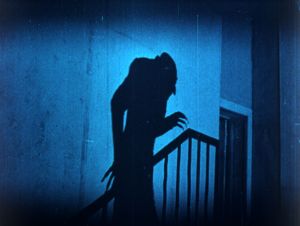
nosferatu-1922-max-schreck-as-count-orlok-climbing-the-stairs

Melie looked at me in astonishment.

‘No! You wouldn’t!’

I grinned.

‘Why not? I am young, free and single. It’s 1982 and I can do what I want.’

She shook her head despairingly, a gesture she made quite often when we were discussing my latest fad.

‘You could – anything might happen – it’s dangerous!’

‘What’s so dangerous about it? It’s in the Evening Echo. They have to keep details of their advertisers  – and anyway – he’s given his home telephone number. Melie, I’ve spoken to him. He’s sounds really nice.’

‘Hmm,’ she said, looking very doubtful. ‘He might sound nice but how do you know that he is? He might be very clever and just putting on the niceness to lure you into a sense of false security.’

‘You are SO suspicious.’

‘There are stories in the papers. About girls who get raped and murdered after answering these personal ads. What did his ad say anyway?’

‘Here, I’ll show you.’ I dug the folded page of newsprint out of my weighty tapestry shoulder bag. Smoothing it out on the table top I pointed out the advert, circled in lurid green highlighter pen.

‘Single male GSOH WLTM single female for socialising/romance?’ Melie looked at me as if the words she was reading were in a foreign language. ‘What does all that mean?’

‘You are so seventies Melie! GSOH means ‘good sense of humour’ – which you have to admit I definitely have. WLTM means ‘would like to meet’. They charge by the word when you put an advert in so people use the initial letters instead. It’s like a code.’

‘Yes, but ‘socialising/romance’?’ She pulled a face.

‘Okay, so I’m most definitely not looking for romance but dinner and drinks, cinema, live music. I’m up for all that provided someone else is paying.’

‘You called him?’

‘I did. He has a good sense of humour – well – he laughed at my jokes anyway.’

‘He must have a good sense of humour. You didn’t tell him the one about the pickled…?’

I grinned. ‘I most certainly did. That’s my barometer joke. Not everyone laughs at it, but he did.’

‘That could well mean that he’s a perv though. What does he do for a living – assuming he has a job?’

‘Don’t be sarky Melie.  He fits windows and stuff and drives a company van. I even have the name of the company he works for.’

Melie looked sceptical. ‘He could borrow the van from a mate. It could be a red herring.’

‘He said it was yellow.’

‘What? Oh you idiot! When are you supposed to be meeting him?’

‘Tonight! Tonight!’

‘Where?’

‘Up at The Hop. It’s within walking distance and I can slip out through the beer garden if he turns out to be gross.’

‘Aha! So you have some doubts already then!’

I shrugged, not wanting to give her too much ground. ‘I told you that I was being careful. I even blocked the number before I phoned him. He asked for my contact details but I said that we weren’t on the phone yet and I was phoning from work.’

‘What did you tell him you did for a living?’

Melie was well aware that I wasn’t always truthful about how I earned my crust – especially when meeting a new bloke.

‘I said that I worked in a boutique in town. Don’t look like that Melie. Blokes always get funny when I tell them what I really do.’

‘It isn’t something to be ashamed of you know, social work is a respectable profession.’

‘Yes, but once you admit to being a social worker they either decide that you are a nosey do-gooder and run a mile,  or they start telling you about their disturbed childhood. Life is much simpler when you work in a boutique – and anyway – it isn’t a total lie. I did work in a boutique once.’

‘Three weeks during the summer five years ago. That was the place that went bust after you threw black coffee over the manager’s suit wasn’t it?’

‘He deserved it, and it was his fault it went bust not mine – he was stealing money from the company. It doesn’t matter how long ago I worked there anyway, nothing much changes when you are flogging knock-off clothing.’

‘What time are you meeting him?’

‘Seven-thirty.’

‘I’ll be outside in the beer garden then.’

‘You really don’t have to be so protective of me.’

Melie gave me that look.

‘Yes I do.’

*********

I walked into The Hop just before seven-twenty. In our house, being less than ten minutes early was considered to be bad manners. My Single Male had given me a vague description of himself; slim, short dark hair, glasses, jeans, navy tee-shirt and denim jacket. I was wearing my customary uniform of black; jeans, scoop-necked tee-shirt, and a cheap Chinese satin jacket that I had picked up in a flea market. The weather being a little inclement I also wore a pair of black fingerless gloves and an enormous knitted scarf. I thought I looked the business. Dr Who had a lot to answer for.

There was no sign of anyone remotely resembling My Single Male; a couple of guys playing pool, the usual drunken teacher propping up the bar and some old chaps eking out their pints in a corner.  Looking through the window to the beer garden, I could see a rather chilly Melie huddled in her Army Surplus greatcoat and woolly hat.

Reluctantly I bought myself a barley wine and found a table near the ladies’ toilet – and the door to the beer garden. Three sips later and a denim-jacketed male walked through the doors. He was slim-ish, dark-haired and his glasses broke up a pock-marked and sallow face. I waved in a slightly regal fashion and he walked over to my table. I had obviously been more truthful about my appearance than he had. The dark hair was greasy, as were his jeans, and his tee-shirt did not look as if it had ever been near a washing machine.

I took off my jacket and bag while he was at the bar, placing them so that he would have to sit opposite me rather than on the bench seat next to me. He sauntered back with an overflowing pint of lager and after shooting some glances at my barricade, he opted for the chair I indicated.

He must have been talking from a script when we had held our telephone conversation because he seemed barely able to string two words together now. I chatted – a little manic perhaps – about nothing very specific.

He grabbed my free hand across the table and tried to take my glove off.

‘Stop it!’ I yelped as I pulled my hand back.

‘Sorry.’ He picked up his pint and slurped it noisily. ‘I just wanted to read your palm. It’s my hobby. You can tell a lot about people from reading their palms.’

‘I bet. What other hobbies do you have?’

The question seemed to throw him a bit. I could almost see the cogs whirring under his lank locks. I knocked back my barley wine quickly while he thought.

‘Films. Yeah – foreign films. I’ve got a mate who works on the boats and brings them in. Do you like – you know – art films?’

I knew exactly what kind of foreign films were brought in by mates on boats, and no, I didn’t like them. My smile was fixed as I placed my empty glass on the table.

‘Want another drink?’ he asked.

‘Yes please. Barley wine. I just need to go to the loo.’

I waited till he was at the bar and ordering before I made a dash for the beer garden, dragging my jacket and bag behind me.

‘Melie! Quick! Creep alert!’

Melie and I ran out of the beer garden and down the road as fast as we could. We didn’t stop until we got to the safety of Melie’s house. I was sure that we’d had enough of a head start but we spent a good half an hour peering round the edge of the curtain in case a yellow minivan drew up outside the door.

We bribed Melie’s brother and his mate to go up to The Hop and see if the Creep was still there. It was worth the price of two pints just to know that he wasn’t hanging around for us. I gave that particular pub a miss for several months anyway. I took Melie’s advice and gave the personal ads a miss too.

A couple of months later a young barmaid was raped and murdered when she finished her shift in a town centre pub. No one ever got caught but a friend of a friend said that she had been in the habit of looking at personal ads in the Evening Echo.

There was a photo fit of the bloke she was seen talking to at the bar before she finished work that night.

Slim-ish, dark greasy hair, glasses, denim jacket, tee-shirt and jeans.

Creepy.

The War – Week 8 of the 52 week short story challenge

hateman.bmp

The warm weather was turning Jenny’s small square patio into an idyllic sun trap. She had everything she needed within arms’ reach; the small picnic table held a choice of reading material, a bottle of water, cool from the fridge, sunglasses and her trusty Walkman. She leaned back in the deckchair, put her earphones in and began to re-read a favourite Dickens novel to the dulcet sounds of Neil Young. A strange mix perhaps, but one that suited her mood.

She’d been out on the patio for less than an hour when it started. A loud and very unpleasant rendering of ‘You Ain’t Nothing But a Hound Dog‘. It was coming from a garden to the rear of hers and what the singer lost in tone and accuracy, they made up for in ear-splitting noise.

Turning off the Walkman and putting down her book, she got up and risked a look up the garden to the source of the noise. The most brief of glances was sufficient to confirm that the music was not about to stop.

They had been warned about potentially troublesome neighbours by the rather snobbish estate agent when they bought the house back in November.  Their end-of-terrace house was ex-council stock and extremely solid. Most of their neighbours had lived in the area since the houses were built after World War II, and had taken up the option to buy their homes when it was offered. Jenny had been born on a council estate however, and based on her own experiences, didn’t foresee any issues with this.

It had been cold when they moved into their new house.

Quiet and cold.

They had apologised to their close neighbours for the noise made when the central heating was put in but the occupants of the house joined to theirs were out at work all day, and the neighbour on the other side had the width of two garden paths between him and the noise of the drilling, added to which he was out on his scooter visiting family for most of the day as well.

Christmas was warm and cosy once the heating was in. Their first proper home together.

When Spring came Jenny and her husband-to-be spent some time in the garden trying to shift the pile of builders’ rubble left outside the back door so that they would actually have a paved area to sit on. They dug out a pathway up the steeply sloping garden and laid paving stones in order to have a stable surface on which to walk when hanging out the washing.

The garden wasn’t large but it was enclosed by larch lap fence panels and once the rubble was removed, grass began to emerge and a couple of patches of daffodils planted by a previous owner. Jenny bought a batch of twigs that were supposed to grow into roses eventually. She planted them with optimism.

House and garden were put on hold at the end of April as they made preparations for their May wedding. Nearly everything went to plan, and the things that didn’t quite work out were manageable. Who knew that their honeymoon room in a New Forest hotel would have a radiator that wouldn’t turn off, or that the wedding taking place in the grounds would be so noisy that they couldn’t have the windows open? They were moved out of the romantic room with the four-poster bed and relocated to a quiet and more substantial suite at the back of the hotel.

It was quiet and cold.

It was good to be away  and exploring new territories on their honeymoon, but equally  wonderful to come home to their little house and the growing garden. Good to return as a married couple with life ahead of them. Jenny was looking forward to the warmer weather and being able to sit out in their garden.

Reluctantly she brought her relaxing-in-the-garden equipment indoors as the Elvis impersonators at the top of the garden completely drowned out her own music and made it impossible to read. Jenny’s husband was at work and the only way to escape from the noise was to shut herself in the front room with the kitchen door and windows shut, and the TV on loud.

She dug out her husband’s binoculars and, hiding behind the new curtains in the back bedroom, she identified the source of the noise. The occupants of the house that backed onto a house three doors down from theirs were having a karaoke party.  The hideous racket was being created by a group of only four people; three males and a female.  From the number of empty – and full – beer cans observed, the party was set to go on all day. The karaoke machine was set up on a huge TV plugged into an extension lead hanging out of a downstairs window. The garden was reminiscent of a rag and bone yard; piles of rusting metal objects, a shopping trolley with only three wheels, damp cardboard boxes sagging in heaps,  and three ancient kitchen chairs around the kitchen door step.

The lone female was perched precariously on a stool that looked as if it had  been pilfered from a pub; she was wearing a very small pair of shorts made from cut-off jeans, and a white boob tube that had lost its elasticity, neither of which did much to cover her extremely pale and substantial body. Two of the males appeared to be of a similar age to her, whilst the other seemed to be of a younger generation. They all sported tattoos but Jenny’s husband’s binoculars were not strong enough to see whether the spelling was correct or not.

Curiosity made her careless and as the curtain dropped back, the female in the garden caught sight of Jenny and let fly a stream of obscenities that completely drowned out the karaoke machine. Jenny left the bedroom quickly, her heart beating double-time, and retreated to the safety of the front room after making sure that all the doors were locked and the kitchen blinds were down.

This was how her husband found her some hours later when he came home; curled up on the sofa under a blanket, curtains drawn and TV tuned to a loud and particularly appalling cable channel.

Jenny cried when she told him about the nasty neighbours and they both hoped that the incident was a one-off.

It wasn’t.

As soon as Jenny settled to read and relax on the patio, the noise would start. Weekends or weekdays, it made no difference. Other neighbours asked the family to turn the noise down and were met with the customary obscene gestures and insults. The female would get very excited and pull down her boob tube, exposing a pair of pallid and pendulous breasts to anyone unfortunate  enough to be looking.

In order to regain some privacy if not peace, Jenny’s husband and a couple of friends laid some paving stones at top end of the garden and erected a garden shed which effectively blocked the view of the patio from the noisy neighbours, who screamed abuse  throughout but were unable to prevent progress.

That was when the warfare started in earnest.

First of all their car boot was broken into in the night. The offenders didn’t steal much and the insurance covered the damage and what was taken but it was another blot on the landscape of their first home together.

Then someone set fire to the front garden gate – in the middle of the night again. The fire was soon put out but the attendance of the fire brigade and the police escalated the incident to a new level. Jenny had no proof of who was behind the fire but the fact that the noisy neighbours were spotted grinning and jeering in the crowd watching the fire engine, was a possible clue.

The son of the family tried to set the garden shed alight but was caught in the act and went off for a spell of juvenile detention.

The loss of her only son inflamed the female even further; their house was next door to the local convenience store and she took to watching from her front room window and pouncing like some malevolent trapdoor spider on anyone that she felt might have reported her son to the police.

Jenny and her husband stuck to the safety of supermarket shopping.

The end of summer was welcomed as a respite from the karaoke parties and nocturnal nastiness, but the return of the prodigal son caused an unwitting end to the hostilities anyway. The police kept him under surveillance once he came home and within a very short time the house was successfully raided for drugs and stolen goods.

The neighbourhood had been under the impression that the horrendous family had bought the house years before and that was why they behaved in such a proprietorial way. Not so. They were  council tenants and the housing department were gleeful at having finally found a solid reason to evict them.

Some of the neighbours came out to watch on the day of the eviction; arms folded and grim smiles as the bailiffs changed the locks and two of the older males were arrested for assaulting a female police officer. This was before the age of ASBOs but the evicted tenants were left under no illusions about what might happen – legally or illegally – if they returned to the property.

When the summer came round again, being able to sit out in the garden was something Jenny had looked forward to but the damage had been done and she never felt that she could relax there again.

It was a relief when they had to move North for her husband’s work.

The little house was rented to a young couple with a child who treated it with a complete lack of care and respect. When their tenancy came to an end, the house was put on the market and managed by the most inept bunch of estate agents going.

Miles away, in a rented house herself, Jenny received a phone call to say that the house had been broken into. The estate agent had left the back door keys in the kitchen drawer and as a consequence the burglars had been able remove the fridge freezer and the washing machine – both of which had been wedding presents just a few years before. They tried to remove the boiler too but failed and the estate agent had to foot the repair bill.

Jenny and her husband sold the house eventually and after a few trips South to visit family, they stopped feeling the need to drive past their old home.


A Journey – Week 7 of the 52 week short story challenge

12507090_10153836052469871_7656341691285248823_n

I celebrated my eighteenth birthday in the bar at the Higher Institute of Education (they were going to put Southampton at the beginning until some bright spark realised what the acronym would be). I had moved on from the cheap but effective barley wine days; Pernod and lemonade was my drink of choice or a snowball if I wanted something a bit sweet and sickly with cherries on the top.

On the night of my birthday I had a combination of these drinks lined up along the table when Jon, the bar manager came over to ask the reason for my celebration.

‘It’s my birthday!’ I yelled. ’I’m eighteen!’

I was hit with the realisation that I had been drinking illegally in this bar for the past two years and that Jon might be a bit peeved about it.

He smiled though, patted me on the head and told me that if I was going to throw up could I do it in the flower bed outside please?

At the end of the night a group of us staggered off for a curry (without any vomiting) and I can vaguely remember listening to one of my dear friends who decided to tell that story.

You know the one – it starts with a girl out driving with her boyfriend at night, in the middle of a forest, when they run out of petrol. The boyfriend goes off to look for a petrol station while the girl locks herself in the car and listens to the radio.

Not surprisingly, a news bulletin interrupts the radio station to say that a dangerous lunatic has escaped from an asylum (that’s what they were called in the bad old days) and that NO ONE is to approach this man.

The girl dozes off and is awakened by a rhythmic thumping on the roof of the car. Being a sensible girl and not having a torch to hand, she stays in the car.

Police cars arrive and surround the car. The girl is told to open the car door slowly and to walk towards the police car in front of her without looking back.

She does as she is told, but just as she arrives safely, she is unable to resist the temptation to look back and sees – a grinning man holding her boyfriend’s severed head in his hand and banging it on the car roof.

In addition to the subsequent nightmares, I had to get up at eight am and take my stonker of a hangover on the Birmingham through train to audition for a place at the drama school my drama teacher had attended, and where one of my friends had been studying for the past year.

I’d been making trips to London on the train since I became a teenager. I’d been as far as Leeds on the train to visit my sister. I was blasé about the trip – after all – I had just turned eighteen and was officially an adult, but a very hung-over adult who didn’t really notice how bad the weather was, nor register the severe weather warnings on the news as I was trying to get out of bed.

I was wearing my audition outfit of black knee-length boots, black tights and a black needle cord dress with a multi-coloured knitted top half – very chic but not very warm. The outfit was finished off by an all enveloping full-length brown mock beaver lamb coat that I had inherited from the mother of one of my ex-boyfriends.

In short I was wearing completely inappropriate clothing for a journey to the Midlands with a snowstorm looming.

Considering that I was travelling during the rush hour, the train trip was fairly quiet and uneventful. I dozed until Reading and then perked up a bit as the adrenalin kicked in and the hangover subsided.  I even had money for a taxi from the train station to ensure that I got to the audition in time.

I was prepared.

I don’t remember much about arriving at the drama school, or the audition itself, apart from the fact that I managed to get through it without throwing up or forgetting my lines. There were other people there, some of whom looked even more bilious than I felt. We nodded nervously at each other. There were also some very loud people who had obviously met each other before and were doing the one-upmanship thing regarding the auditions they had attended. It occurred to me that if they were that talented, why were they auditioning for a small drama school in the Midlands rather than RADA or LAMDA?

I had already failed to get into either of those institutions.

The weather had worsened while I had been otherwise engaged; spouting Shakespeare and a piece from ‘Little Malcolm and His Struggle Against the Eunuchs‘ that was considered a bit daring at the time.  Looking out of the window, I discovered that the world had turned very white and cold.

I had no idea whether my audition had been successful, and the only thing that really mattered was getting back to the Students’ Union bar, knocking a few back and finding out what my boyfriend had bought me for a birthday present.

Throwing on my bear of a coat and picking up my bag, I groaned as I received the news that the buses had stopped running and the very kind man sitting behind the desk in the hall had been unable to get me a taxi.

I had to walk through a snowstorm in totally unsuitable boots and a coat that grew more icicle heavy by the minute. This was not my idea of a plethora of snowballs. There weren’t many other people around; I assumed that I was the only one stupid enough to be out in such dreadful weather but I was determined that I was not going to be stranded.

When I got back to New Street Station I discovered that my through train had been cancelled due to the adverse weather conditions Up North, but that there was a train for London leaving in the next fifteen minutes and with any luck the weather Down South might be  good enough for me to get a connection.

The train was packed and I stood all the way from Birmingham to Euston. I staggered across a cold, wet London to Waterloo and collapsed on a slow train that was going home – eventually.

The boyfriend met me at the station and gave me my lovingly wrapped birthday present. It was an M & S brushed nylon dressing gown of a particularly vile pale green. It was three sizes too big for me and fit only for an old and confused person to wear in a nursing home. In today’s parlance it was the most epic of fails.

Gritting my teeth, I rallied all my drama school audition experience in order to express a suitable level of gratitude and allowed him to drive me to the bar.

Once there I dumped him and his dressing gown and got well and truly plastered again.

I passed the audition.

$_35

Lost and Found – Week 6 of the 52 week short story challenge

1495392_10152762176544871_125551827691198947_o  

Lost and Found and Lost Again

Rochelle sat on the rocky outcrop at the end of the beach. Her beach. The beach she had known all her life and the place she sought whenever life became too much. Unfortunately life became too much for Rochelle every day until she could push it aside with her current cocktail of choice. She had been told to avoid alcohol because it could have an adverse effect on her medication but ‘could have‘ was not a definite and there were days when avoidance was impossible.

The youngest of four girls, Rochelle was often referred to as ‘the Afterthought’ by her older and married sisters. They were all in their teens when their mother surprised them – and their father – with the birth of a tiny and delicate sister who was duly fussed over and petted by them all.

Perhaps as a consequence of this concentrated attention, Rochelle was a demanding baby; the toddler who invented new levels of tantrums, and the most sulky and erratic of teenagers. Mercifully for her sisters, they had married and set up their own homes by the time she had reached this most petulant and attention-seeking phase of her development.

Her father was bewildered by Rochelle’s behaviour. His other daughters had seemed so easy by comparison. Her mother continued to dote and spoil her pretty little girl, enchanted by the sweetness of her nature – provided things were going her way.

School was a trial for Rochelle. She made few friends but many enemies due to an unfortunate ability to tell tales with a mask of complete innocence that belied her devious nature. Tears and tantrums failed to move her teachers and she left school without any qualifications due to an extensive sickness record and no ability to apply herself to anything but craftwork.

Expressing a hitherto hidden desire to get away from home and family, Rochelle informed her parents that she wanted to go to college. A college on the mainland. A college far away from home. Puzzled by this desertion, Rochelle’s parents applied a few sanctions. She could go to college but only if she agreed to stay with Mr and Mrs Bullingham, elderly family friends who could guarantee to keep her safe from the wicked world.

It was agreed and having been escorted to her new home by her tearful mother, Rochelle settled into her new life. ‘Settled‘ may not have been the best description of how she spent her days. The college was small, more like a finishing school for young people whose parents were not ready for them to tackle the hazards of big city life. Many of her fellow students paired up throughout their time at college but not Rochelle. Some of the boys – and teachers – found her childish behaviour initially enchanting but the magic wore off very quickly and they soon realised that she was a person to be kept at a distance.

Rochelle learned how to flirt and flutter her eyelashes in order to get others to do things for her. She also developed a taste for alcohol; only to be consumed in her room or when she wasn’t due home to the Bullinghams’ genteel and alcohol-free zone for some time.

The college course came to an end and Rochelle returned home to her island, still without qualifications but possessed of a multitude of manipulative skills. She had made a few friends who kept in touch – perhaps because they felt sorry for the girl who didn’t seem able to grow up. To those who cared for her, Rochelle continued to be sweet and charming. Her sisters loved her but grew increasingly intolerant of her demanding behaviour – especially when she had been drinking.

Gentle suggestions regarding Rochelle finding work were rebuffed and met with floods of tears and prolonged sulking. Employment on the island  was limited anyway but for a young woman with little experience, no real skills and an air of naivete that did not transfer to the workplace, it was impossible. Rochelle’s parents came to the conclusion that she was unlikely to ever make a financial contribution to their household.

Being of a sensitive and rather sentimental nature, getting Rochelle involved in voluntary work for animal charities on the island may not have been the wisest of choices but it kept her occupied and her craftwork earned small amounts for the darling animals. She felt that she had found her true calling at last and was quick to tell her friends of her new purpose in life.

Her sisters however, grew increasingly concerned about Rochelle’s mental health, especially when she was at home or attending family events. She screamed and cried; retreated to her room when she couldn’t have her own way and had to be rescued from bars when her cocktail consumption got her into peril with men who were less scrupulous than her college chums.

There was a spell in hospital during her mid-thirties; life had become too much after Rochelle developed a crush on the much-married manager of the seal sanctuary. She stalked him and bombarded him with handmade cards containing coy messages. He succumbed to Rochelle’s childlike charms but panicked when she announced that she was with child herself. His wife found the bag of love tokens when emptying out his recycling and after talking to her repentant husband, contacted one of Rochelle’s sisters who in turn spoke very sternly to her parents.

The problem with living on an island is that the only strangers were tourists; everyone else knew each other and in order for Rochelle to escape the laughter and mocking glances, her parents had her admitted to a small private hospital where she was kept under heavy sedation following her ‘operation‘ and  caused her to retreat further into the safety of her fantasy world.

By the time her doctors felt she was well enough to go home, the manager and his wife had been relocated to the mainland, and another scandal had replaced Rochelle’s assumed shame. She made more friends whilst in the hospital; women who had been damaged and made vulnerable by life, women who saw Rochelle as an entertaining child, a willing drinking-companion, and a person unfazed by their own bizarre behaviours.

As the years passed, Rochelle’s sisters gave up on the idea of ever finding a man patient enough – and wealthy enough – to take their sister away from their aging and increasingly frail parents. They did their best to try and encourage some element of maturity in their baby sister, but she remained that – a child-woman who was incapable of doing more than making chocolate-box cards for animal charities and stamping her foot when life failed her.

Through one of her old college friends, Rochelle became acquainted with Trudi, a woman who had spent some years recruiting people for a demanding religious sect. As a consequence, she was adept at spotting those who life had left open to exploitation. She honed in on Rochelle; showering her with compliments, feeding her ever-hungry ego and grooming her as a useful source of information as well as a potential mouthpiece for Trudi’s opinions.

Trudi had a lucrative business selling email addresses to companies who used them to spam and intimidate people who had no interest in their services – especially the elderly. Several of her friends had become wise to this misuse of their details and Trudi found herself needing a new method of obtaining information.  Rochelle fell for Trudi’s explanation of needing email addresses to raise funds for charities – animal charities of course – and was quick to use her volunteer status to find mailing lists of anyone who had ever made a contribution. Trudi was ecstatic, and clever enough to get Rochelle to use her own email address when sending on the information. She paid Rochelle a token amount and kept the rest of the money  to herself.

Rochelle watched the police car draw up outside her house with some curiosity. At 53 years of age she had never seen a police car at her house before and idly wondered if her parents were alright. She turned back to the sea again and barely registered the crunching of police-issue boots on the shell and gravel beach. Rochelle’s mother had tried to persuade the police that her daughter had mental health problems but some of the people on the lists sold via Trudi’s dubious transatlantic contacts were from old and very influential island families who objected to being inundated with emails peddling Viagra, funeral plans and weight loss products.

One of Rochelle’s sisters met them at the police station and acted as her appropriate adult. Rochelle didn’t really know what to say in response to the questions. Tears and eyelash fluttering failed to move the stony-faced female detective and her equally impassive male colleague. After hours of questioning, Rochelle’s sister requested a break and took the opportunity to give Rochelle the kind of talking to she had badly needed all her life

Eventually Rochelle was persuaded to give up Trudi’s details and tell the version of events as she understood it. The detectives weren’t convinced that anyone could be as gullible as Rochelle but had little choice to let her go with a caution and a very stern warning about getting involved in this kind of scam in the future.

Unable to trust Rochelle, the animal charities she had previously supported made it clear to her parents and sisters that her services were no longer required. Her computer had been taken away by the police and her parents stated that they didn’t want it returned. Those friends she had kept in touch with via social media wondered idly what had become of her but no one cared enough to find out. Trudi was tracked down and despite blaming everything on Rochelle, her past track record gave her away and she was exposed as the force behind many other such scams.

Rochelle spends most of her time on the rocky outcrop; lost again but unlikely to be found this time.


That London – Week 5 of the 52 week short story challenge


img011

When my parents split up, there were just over six weeks before the end of the summer term. During that time I was catching two buses to get from one side of the town to the other. This came to an end when I got run over by a green station wagon at a busy crossroads in the middle of the main shopping area. It wasn’t a terrible accident. The car was slowing down at traffic lights, I sustained a grazed knee, cut my ankle and found myself sitting in a daze on a traffic warden’s gabardine mac, holding up traffic while an ambulance was called. I can still remember the smell of the coat and the confusion of crossing the road one moment and being flung up and out into the middle of the crossroads.  I would probably have been patched up at A&E and sent over to my mother – who was working on the hospital switchboard – but the kindly traffic warden insisted on picking me up and putting me in the ambulance. He bumped my head on the roof and concussion was added to my hitherto minor injuries.

It was enough to make my mother move me to a junior school closer to my Auntie Dee’s  and although I had the sporadic protection of my three male cousins, it was hard trying to make friends, especially as the accident had left me so frightened of crossing roads that I didn’t play out much. The other problem I encountered was that my fellow pupils had trouble getting to grips with my name: Cheryl, Shirley, Cherie were just a few of the variations. In desperation I announced that my name was Fred, and it stuck, much to my mother’s horror.

‘Why Fred?’ She said. ‘Any name would have done, but Fred!’ I shrugged, thinking that people would forget it by the time I moved up to secondary school in September. They didn’t. It stuck. It probably endured because in an all-girl school, our little clique consisted of Lee, Jo, George and me, Fred. Even the teachers – the more civilised teachers – called me Fred. The sub-human teachers – especially the hag who pretended to teach geography – treated me with the disdain reserved for anyone out of the ordinary.

Fred was not the good little girl I had been at junior school. Fred was an embryo rebel who lived in a bedsit with her mother and who had waved goodbye to a normal family life. She drank barley wine and hung around the student union bar on Friday nights when most of her peers were at youth clubs.

Within our group, it was George that was my best friend. She lived in the ground floor of an elegant detached house split into two flats. Her dad – also called Fred – was an aging hippy married to a much younger woman. George and her two older brothers treated their bewildered stepmother with a rudeness that the poor woman had done nothing to deserve. Their own mother had done a flit many years before, so she wasn’t to blame for the splitting up of their ‘happy’ home.

From all accounts George’s mother had been at the centre of the London party scene when George’s father met and married her. She knew rock stars and actors and after reluctantly bearing three children, had returned to her roots leaving confusion in her wake. George and I were thirteen when we went to stay with her in London for a very long weekend. We were so excited.  ‘That London’ was a place of magic and mystery; a place you went to on heavily supervised school trips to see exhibitions at the V&A, or the much vaunted Tutankhamun exhibition. I went to that one, I queued for hours, I brought home a paper carrier with King Tut’s death mask on it and not much else. I was older and more cynical by that time.

Our trip to London started well. We were met at Waterloo station by George’s mum. She presented us with make-up boxes from Harrods and took us out to dinner at a chic Italian restaurant round the corner from the three-storey Chelsea mews that she was looking after for friends. Until that moment, spaghetti bolognaise was something that Crosse & Blackwell did and it came in a small or a large tin. I may have turned my uneducated nose up a bit at the authentic Italian version. Okay I did but so did George. Her mum plied us both with red wine and thought it amusing when we got a bit squiffy. She was not quite so amused when we both threw up later that night. We had to clear it up ourselves though. She was far too gone and shut herself into her bedroom to avoid  the heavings and the smell.

She took us to Biba the next day and I spent 75 pence on a black scoop necked tee-shirt with yellow and black striped sleeves. The only Biba item I ever owned and I kept for years afterwards  even though it made me look like a bumble bee. That afternoon we went to the Odeon cinema in Leicester Square, saw ‘What’s Up Doc’ and gorged ourselves silly and hyper on unsuitable snacks. More upchucking ensued after a bumpy taxi ride home.

By Sunday we had spent nearly all of George’s mum’s limited funds and relations were rather frosty when we failed to show sufficient appreciation at being taken to the jousting at the Tower of London before being put on the train to come home. I was in disgrace because I had wanted to wear my favorite purple needlecord jean jacket. She said it was common  so I had to swelter in my shiny black PVC mac – with stick on cherries. Parting was not sweet sorrow. We were ungrateful brats and hell would freeze over before she ever invited her daughter – and her daughter’s equally obnoxious friend – to stay.

I think that our joint upchucking and hangovers after all the red wine had set the seal on our stay. George’s mother didn’t have a maternal bone in her body and we stopped being amusing when we started making a mess. We stood in the corridor of the train and sang King Crimson songs all the way home. Our fellow passengers weren’t exactly enthralled by two scrawny teenagers warbling ‘21st Century Schizoid Man’ and scowling at anyone who came out of the carriage to use the toilet.

Being only 40 minutes away by train, London was accessible to us, and became even more so as I moved into my mid-teens. I nearly had a very exciting meeting with a famous person. I was doing a project on Edward Gordon Craig – actor, director and scenic designer – as part of my ‘A’ level drama and theatre arts. I came across an advert in The Stage regarding research into the actress Ellen Terry – Craig’s mother. I wrote off to the box number and was delighted – not only to get a reply but an invitation to meet up at the V & A.  My mother had visions of me being kidnapped, raped or worse by some wicked theatrical type and so I wasn’t allowed to take up the invitation. Poor Nigel Hawthorne – I think I would have been safe with him somehow.

I became more blase about going up to London; shopping trips to Oxford Street, live music at the Hammersmith Odeon, the occasional matinee. It was a place to pass through en route to somewhere else when I was at college in Birmingham but never a place to actually live.

When our youngest was four we planned a mega trip to that London; he and his brother thought we were just going to visit Daddy’s airport and were gobsmacked when we climbed aboard a Luton-bound Easyjet. A train to central London, the underground and a sight-seeing trip on a double decker bus. The boys loved it – especially when we arrived at the Science Museum. We were going to take a trip on the Thames but time ran away from us.

I had always been quite chilled on my previous visits to the capital, but with two small and inquisitive boys in tow, my maternal instincts had me seeing perils round every corner. A fear of pickpockets and muggers outshone that wonderful Tube station scent that I knew so well. We survived it though and my baby boy announced that it was his best birthday ever.

Our most recent trip to that London was in the year of the Olympics. We were given free tickets to go on the London Eye and as we were spending a week down South to see family, we took the opportunity to travel up by train.  Our eldest son was away at Uni but being the intrepid train traveller that he is, he planned our journey and acquired the tickets for the trip.

I was less fearful on this trip. I like being on trains and so does my husband. My six foot baby boy was less enamoured – especially with the people who used their phones on the quiet carriages. The London Eye was wonderful and the boat trip that was part of the package enabled us to catch up on the experience we had missed out on years before. My baby boy liked London – but only if there weren’t any people in it. They spoiled.

That was my London. I’ve no desire to go back. Liverpool and Manchester are sufficient for me now.


Three Siblings – Week 4 of the 52 week short story challenge

stick-figure-unhappy-family-fun-cartoon-divorce-abuse-concept-33512931

I came back to work after a week’s holiday and found the Bennett family in residence. Two girls and a boy; they were withdrawn and several of my colleagues were finding them difficult to deal with. As a consequence of this – and because I was in the middle of my social work training and considered best placed to take on the ‘awkward’ children, I was allocated as their key worker.

The first few days were spent going about my usual routine of getting children and young people out of bed, dressed and down for breakfast. As a female member of staff I usually worked in the girls wing, but as one of the few females who would volunteer to get the boys up I had the chance to observe all three children without being too intrusive.

Ray was the eldest of the three; at fourteen he was in the middle of our group of boys but he was very much apart from the lumbering big boys constantly flexing their macho muscles, the voice-breakers who turned from squeaky to bass at a moment’s notice and the little ones who had some very severe behavioural issues.

Ray constantly sought the company of his sisters; twelve year old Angela and eight year old Suzanne. The three of them were frequently found in a small and very self-contained huddle in the TV room or at the far end of the veranda when told they had to go outside for some fresh air.

After three days of trying to get to know my key children, I stayed on for a couple of hours after my shift ended in order to sit and read their case files.

It was not comfortable reading.

For the past six years the Bennett parents had been arguing over access arrangements following their divorce. Their mother had custody of the children after fleeing domestic violence and spending a period in a hostel. She had never reported her husband’s abuse to the police and there were no third-party evidence records, Mr Bennett was denying any form of abuse and demanding that he have weekly access to his children.

The children refused to see him.

They had been to family court on numerous occasions and it was accepted by Mrs Bennett that the children would attend a centre where their father could have supervised access. Mr Bennett refused this however. He wheeled out a number of family friends who attested to his good character and what an excellent father he had been. They also claimed that Mrs Bennett had mental health problems and was using the children to get back at her ex-husband.

At the most recent court appearance the judge had made an order that the children should go out to dinner with their father once a week without supervision. Mrs Bennett was distraught. The children – led by Ray – flatly refused to go and the judge ordered that they should be taken to a children’s centre as their mother was ‘obviously’ having a disruptive influence on them.

They came to us in just the clothes they stood up in. A hastily appointed social worker had been to their house and collected clothes and belongings but their mother was in such a state that the suitcases contained a strange jumble of items that had to be supplemented by our meagre stock of clothing and toiletries.

Until things were resolved the children were not allowed to have visits or even phone calls from either parent. Letters and cards were to be opened by staff and vetted before being given to the children. The social worker had been charged with compiling reports on all three of them, and, as the key worker, had to compile daily reports based on my own observations and those of my colleagues when I was off duty.

What had I observed so far? Ray was quiet; he didn’t join in with the usual banter and he sought the company of his sisters wherever possible. Angela was equally self-contained but Suzanne was more sociable; joining in with the younger girls when they chatted about hair and clothes and TV. A look from her brother or sister would bring her away from the group and back to their sides.

We were one of the few centres in our local authority to have a school unit on the premises; educational assessments had so far revealed that all three children were of above average intelligence but would not participate in team activities and would not talk about their past. Of the three, Suzanne was the most outgoing but any attempts to get her to talk about her home life were quickly prevented by the interventions of Ray and Angela.

We all tried to break through to them but after two weeks we were still no closer to understanding what had sparked their defiance in the courtroom. The social worker had been to visit their mother several times but she was just as withdrawn and reluctant to say anything other than that the children wanted to stay her and that she was frightened of her husband. The social worker stated – rather gruffly – that Mrs Bennett seemed unable to say anything specific about what it was that her husband had done to her.

Unable,  unwilling or terrified?

The good thing about training to be a social worker for two and a half days of my working week and coming in to carry out usual duties for the other two and a half, was that it was easier to put my newly acquired knowledge into practice. We were currently studying play therapy as a means of getting children to open up about their experiences. The more I learned, the more I wondered if this was a way of finally getting through to the Bennett children. I talked to my tutor and he gave me some books to study, together with a group of therapy dolls; mother, father and three children.

I had an idea that the key to it all was to get Suzanne alone, so with the blessing of my manager, I arranged for her to be released from morning classes for a couple of hours. I found out later from the teachers that Ray and Angela were rather distressed when Suzanne left the room and they had to be quite stern in order to prevent them from following her.

I had set up one of the smaller conference rooms with cushions, bean bags, toys and the dolls. I also laid on refreshments in an effort to make the atmosphere as pleasant as possible. Colleagues were advised not to disturb us. I’d spent the previous evening reading up on everything I could relating to the use of dolls in play therapy and although I was nervous, I also felt exhilarated at the thought that I might possibly get to the bottom of what was disturbing the Bennett children.

It wasn’t easy. Suzanne had been well-schooled by her siblings. The wall that the three of them – and their mother – had built up was almost impenetrable.

Almost.

I used the dolls to talk about my own family. My father coming home from work, my mother cooking dinner, my sister reading a book and my brother and I playing with his cars.

All very normal and harmless.

Suzanne picked up the father doll and put him to one side. She put the mother doll and the three children together on the sofa I had made from cushions. Then she picked up the father doll again and looked at him.

She looked at me.

‘Would you like to say anything to the father doll Suzanne? Or to any of the other dolls?’

Suzanne looked back at the doll. I could see that this was difficult for her and being a novice at play therapy, my tutor’s advice about not going too far or too fast was ringing in my ears.

Suzanne threw the father doll face down on the carpet.

‘You are a bad man. You make Mummy cry and you come into mine and Angela’s room at night. Ray says we mustn’t tell though.’

‘Why not?’ I asked. ‘Why mustn’t you tell?’

‘Ray says that Daddy will kill Mummy if we tell. He saw Daddy in the kitchen with Mummy. Daddy had a knife. He hurt Angela and made her cry too. We don’t like Daddy. That’s why we won’t go to dinner with him.’

She started to cry then; frightened because she had told the big secret. Frightened that her Daddy was going to hurt them or even kill their mother. I put the dolls to one side and we hugged before polishing off most  of the sweets.

Leaving Suzanne building a car out of Lego, I went next door and spoke to my manager. He called the social worker – who was out of the office as usual – so we decided that the next step was down to us.

I went down to the classroom and collected Ray and Angela. They looked sullen and even more withdrawn than usual. From the glances that they gave Suzanne, I could see that they knew something had happened.

My manager took the lead. He explained that adults often try to get children to keep secrets but that some secrets are bad, and the adults have no right to make children keep them. He told them that a part of our job was to protect children from bad secrets and keep them safe from people who frighten them.

They were truly frightened and now we knew why. My manager looked over to me and indicated that I should let them know that we understood their secret.

‘I think that your Dad has asked you to keep some bad secrets. I think that he has told you that if you tell anyone, he will hurt your Mum and then you’ll have to go and live with him. I think that your Mum is just as frightened of your Dad as you are and that’s why she has never told anyone about what he does to you all. You shouldn’t have to keep secrets like this. It isn’t fair on you, or your Mum. We will do our best to protect you. Will you let us help?’

It took a while but we both knew we had to be patient with them. The three exchanged glances and eventually Ray spoke.

‘He doesn’t hit Mum but he makes her cry and tells her how useless she is. He – he – hurt Angela and he said he was going to do the same to Suzanne when she is a bit older. He says it is his way of showing them how much he loves them and if we tell anyone he will pay for someone to kill Mum and he will get custody. He has lots of money and he can pay for a decent lawyer to make it look like we are the liars. If he tries to hurt my sisters I will kill him. I don’t care what happens to me.’

Ray’s croaky boy-to-man voice brought tears to my eyes. My manager took charge at this point. We had to get the police child protection unit involved and once the social worker was tracked down, she came in and took over supervision of the interviews.

The children had been through several different hells but as a consequence of their disclosures the court order was overturned, their father was arrested and once their mother realised that they were all safe, she gave an interview that confirmed everything her children said – and more.

Packing up their worldly goods to go home was one of the happiest tasks I had ever undertaken. It wasn’t the end of the story by any means but we had started the ball rolling and the social worker was arranging for counselling for the children and their mother.

Their father was remanded in custody. He had maintained his very professional coldness throughout, but when the alleged sexual abuse of Angela was brought up, he snapped and attacked the female detective conducting the interview. From the names he called her, and the threats he made,  it left no one in any doubt of the mental abuse he had inflicted on his family.

He was found guilty and imprisoned but who knows what lasting damage was done to those three children and their mother? Hopefully the counselling helped but that sort of support is expensive and when cuts have to be made in social care, aftercare and support of abused children is a low priority.

If there is any justice in the world then there should be a happy ending to this tale.

Retelling a fairy story – Week 3 of the 52 week challenge

billboard_WLM_1920_02


There was once a man called Colin who had worked hard all his life and was very honest: this honesty meant that he took pride in his work and made sure that everything was done properly. This did not go down very well with his colleagues, especially the management team, who wanted Colin to work faster and didn’t really care much about the quality of his work.  Colin smiled sweetly when his colleagues complained, and dreamed his secret dream of living in a shack on Venice Beach in California. He had been there on holiday with his wife Morag and their two daughters; the women spent their time shopping and seeing the sights but Colin just wanted to sit in the sunshine outside an old wooden shack and be happy.

His daughters grew up and left home; Morag became a senior executive in the same company as Colin. She did not want him to retire. She did not want him to live on Venice Beach. For some years Morag had been having an affair with one of her fellow executives. Carrying on the affair under Colin’s very nose added to the excitement for Morag,  she was also very possessive and wanted to make sure that she knew what Colin was doing at all times. As a consequence it was Morag that held the family purse strings and monitored their bank accounts.  Because of her position in the company, most of their wages were spent on ensuring that Morag looked the part; designer clothes, regular hair appointments to stop her grey roots showing and the odd spot of Botox so that she never revealed a wrinkle or a frown.

Apart from his secret dream, Colin had one other pleasure. He liked to bet on the horses. On Saturday mornings he would wander along to the village newsagent, buy a paper, sit in the cafe and study racing form before placing his bet at the bookmaker. Morag very graciously gave Colin thirty pounds each week from his wages for these bets. He had small wins sometimes but was too cautious to ever make any real money.

Every weekday morning Colin would sit at his desk and wonder why the pile of files in his in-tray never seemed to get any smaller. He knew that he had finished off innumerable cases, but however many he finished, the teetering pile was even higher the next morning. There were times when the usually genial Colin wondered if he would ever finish his work and be able to retire.

Due to a change of management, Colin found himself under even more pressure to speed up his working methods. His new manager, after a week of Colin’s snail’s pace progress, appointed a colleague to work alongside him. Young Alfie had already worked his magic in several other departments in the company and Colin’s manager considered himself very fortunate in acquiring his services before Alfie could be spirited away to another office.

Alfie and Colin got on with each other right from the start. Alfie understood Colin’s work ethics and managed to speed up the process without losing integrity. Colin told Alfie about his dream, and his sadness that Morag insisted that he carry on working because they needed him the money.  Alfie had the knack of getting people to confide in him and after making some discreet enquiries, he discovered the truth about Morag’s illicit affair, and her real reasons for blocking Colin’s retirement.

As well as helping him with his workload, Alfie  shared Colin’s interest in horses and made a few recommendations that increased the winnings at the bookmaker’s. He also persuaded Colin to open a new account at the Post Office with the proceeds. Colin didn’t really like the idea of keeping secrets from Morag, but was won round by Alfie’s suggestion that he see it as the Venice Beach fund and what a nice surprise it would be for Morag when there was finally enough for them both to retire on.

The biggest puzzle for Alfie was that however hard he and Colin worked to clear the backlog, the pile of files never seemed to go down. He decided to hide in the office one night and see if he could get to the root of the problem.

Not surprisingly, Morag was at the root. Alfie melted into the shadows of the large filing cabinets and watched as she crept into the room with her arms full of dusty files. She carefully cleaned them off and placed them at the bottom of Colin’s in-tray. Alfie watched her leave and decided to see what she did next. Colin had told him that Morag’s demanding job meant that she worked late most nights so he usually made dinner for them both after he had done all the housework.

Alfie disliked Morag long before he actually met her but working with Colin made him realise how much she took advantage of her kind and hardworking husband. That night he followed her upstairs to the office of her colleague. He couldn’t see anything through the frosted glass windows but judging from the noises that came from that room, they weren’t discussing business. Morag’s absence enabled Alfie to enter her office and have a look round. He didn’t know quite what he was looking for, but had a feeling that there was more to Morag’s behaviour than just the perpetuation of her affair.

It took a little while but magically, Alfie found just what he was looking for. The age of the Smartphone made gathering evidence SO much easier than it used to be in the old days. He snapped away happily and left the building long before Morag and her paramour had tidied up and departed by separate exits.

It was becoming obvious that most of the case files that appeared on Colin’s desk were those that had been abandoned by other staff, usually because of the death of the person concerned or due to a complete lack of interest by the case holder. Alfie sorted through the files and took the moribund cases for himself before Colin arrived for work. The pile of active cases was very small in comparison and by lunchtime the in-tray was empty for the first time in years.

Colin’s manager was very pleased by this increase in productivity – and at his own bright idea of getting Alfie transferred to his department. He suggested that Colin and Alfie take an extended lunch to celebrate. Morag, dropping into the office to check on Colin, was not best pleased at his absence or by his empty in-tray. She would have been even more unhappy had she known that Colin and Alfie were in the bookmaker’s waiting for the results of an accumulator that Alfie had put on in Colin’s name.

Colin won more that morning than he had ever won in his whole history of betting. Deciding that it was now or never, Alfie took the opportunity to advise Colin of Morag’s affair while they were sitting in the cafe eating an all-day breakfast.

Colin knew already. He had known about Morag’s infidelity for some time but turned a blind eye to it, hoping that it would stop when his daughters left home. What Colin didn’t know however, was that Morag and her lover had also been embezzling money from the company for years and putting most of it in an account in Colin’s name. Alfie explained that she probably intended to lay the blame at Colin’s door if the discrepancies ever came to light.

Alfie and Colin made a few stops on their way to the office, ensuring that they had assumed a more serious demeanour by the time they got back to work. Morag, undoubtedly tipped off by one of Colin’s colleagues, stormed into the office and gave Colin a good telling off for going out to lunch when there was work to be done. Not surprisingly the in-tray had filled up again in Colin’s absence. Morag also informed Colin that she was going to a conference in London for three days and would be leaving within the hour.

Using the luggage that he and Alfie had purchased, Colin packed up his world that night. It didn’t take long. He and Alfie had made some significant bank transfers at lunchtime so that Colin’s new account reflected his wages and winnings whilst the embezzled funds were to be found in an account that Morag had opened.

Colin was on his way to Venice Beach with a healthy but honest bank balance. Alfie saw him off at the airport before handing in Colin’s notice and presenting evidence of Morag’s duplicitous behaviour to their manager. Morag and her beau were arrested for fraud at a hotel in London at about the same time that Colin was sipping champagne over the Atlantic.

Alfie didn’t turn up for work the next day. He had problems to solve elsewhere.

And Colin? Well Colin Schumacher lived happily ever after of course.


The-Shoemaker-and-the-Elves-800-noTOJ-title-662x1024